
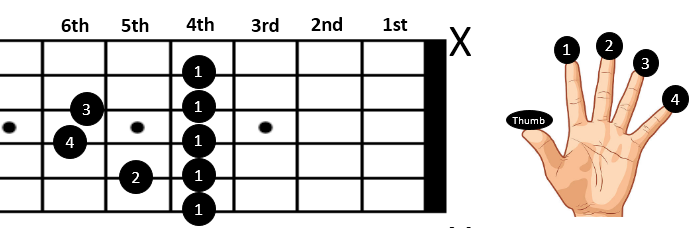
C# Minor (C#m) Chord:
-
1st Finger (Index): Barre across all six strings at the 4th fret, except the 6th string. Apply even pressure to ensure all strings ring out clearly.
-
2nd Finger (Middle): Place your middle finger on the 5th fret of the 2nd string (B string).
-
3rd Finger (Ring): Position your ring finger on the 6th fret of the 4th string (D string).
-
4th Finger (Little): Place your little finger on the 6th fret of the 3rd string (G string).
Strumming Instructions:
- Strum all the strings except the 6th string. Make sure to avoid the low E string to focus on the chord’s intended sound.
Tips:
- Barre Pressure: Apply consistent pressure with your index finger to avoid muted or buzzing strings. Strengthen your barre finger through practice.
- Finger Placement: Position your fingers close to the frets for clear notes. Avoid pressing too hard to prevent hand strain.
- Thumb Position: Keep your thumb behind the neck for support and leverage. This helps in maintaining the barre and reduces strain on your hand.
- Strumming Technique: Start with slow strumming to ensure clarity in each note. Gradually increase speed as you become more comfortable with the chord.
- Practice Transitions: Work on smoothly transitioning to and from the C#m chord in common chord progressions to improve fluidity in your playing.
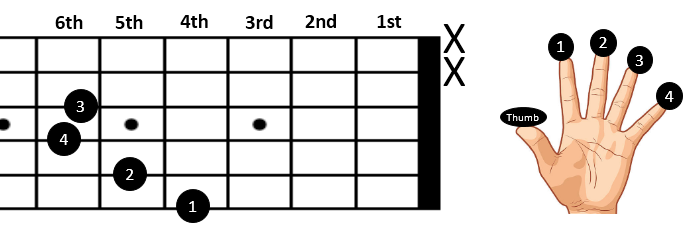
C# Minor (C#m) Chord:
- 1st Finger (Index): Place your index finger on the 4th fret of the 1st string (high E string). This note will serve as a key part of the chord’s structure.
- 2nd Finger (Middle): Place your middle finger on the 5th fret of the 2nd string (B string).
- 3rd Finger (Ring): Position your ring finger on the 6th fret of the 4th string (D string).
- 4th Finger (Little): Place your little finger on the 6th fret of the 3rd string (G string).
Strumming Instructions:
- Strum all the strings except the 5th string (A string) and the 6th string (low E string). Focus on hitting the top four strings for the full sound of the chord.
Tips:
- Finger Positioning: Ensure each finger is placed firmly on the correct fret and avoid touching adjacent strings to prevent unwanted muting.
- Barre Pressure: Although this chord doesn’t require a full barre, ensure your index finger’s pressure is firm enough to clearly sound the 1st string.
- Hand Position: Keep your thumb positioned on the back of the guitar neck for stability. This helps in applying the correct amount of pressure and reduces hand strain.
- Strumming Accuracy: Be careful to avoid strumming the 5th and 6th strings, as they are not part of the chord. Practice strumming patterns slowly to build accuracy.
- Practice: Regularly practice the C#m chord in various musical contexts to become more comfortable with finger placement and transitioning between chords.
2 thoughts on “C#m Chord on Guitar: How to Play and Practice, made Easy”