
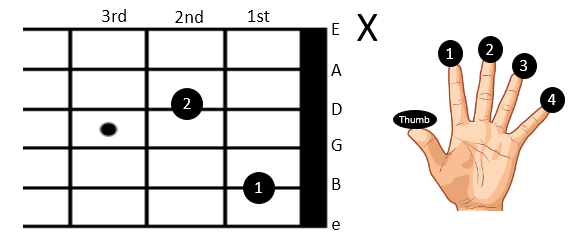
Here are some tips for mastering the A Minor 7 (Am7) chord on the guitar:
1. Fingering Technique:
- Standard Open Position: Place your index finger on the 1st fret of the B string (2nd string). Place your middle finger on the 2nd fret of the D string (4th string). The G string (3rd string) and high E string (1st string) remain open, while you avoid strumming the low E string.
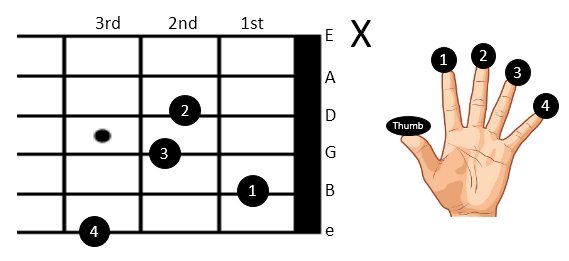
- Alternative Fingering: Another common way to play Am7 is by using your ring finger on the 3rd fret of the B string (2nd string) while keeping the rest of the fingers in the standard Am position. This provides a fuller sound.
2. Smooth Transitions:
- Practice Chord Changes: Am7 is often used in songs that involve the C major, G major, and F major chords. Practice transitioning between these chords to build muscle memory and improve your chord-changing speed.
- Use a Metronome: Start slow and gradually increase the tempo. This helps ensure that your chord changes are clean and accurate.
3. Explore Different Variations:
- Barre Chord Version: You can play Am7 as a barre chord by barring all the strings at the 5th fret with your index finger and placing your ring finger on the 7th fret of the A string (5th string). This gives a higher-pitched, richer sound.
- Extended Versions: Experiment with adding the 9th (B note) by placing your pinky on the 3rd fret of the B string. This creates an Am9 chord, adding more depth to your music.
4. Strumming Patterns:
- Practice Different Rhythms: Am7 fits well in both strumming and fingerpicking patterns. Try different strumming patterns, including downstrokes, upstrokes, and syncopated rhythms, to see how it changes the feel of the chord.
- Focus on Dynamics: Experiment with playing the chord softly and then more forcefully. This variation can add emotional depth to your playing.
5. Listen and Learn:
- Songs Featuring Am7: Listen to songs that prominently feature the Am7 chord. Notable examples include “Wish You Were Here” by Pink Floyd and “Blackbird” by The Beatles. Playing along with these songs can help you understand the chord’s role in different musical contexts.
6. Common Progressions:
- Practice with Common Progressions: Am7 is often used in progressions like Am7 – D7 – G7 – Cmaj7. Practice these to see how Am7 interacts with other chords.
7. Use a Capo:
- Capo Variations: Experiment with using a capo on different frets while playing the Am7 chord. This can change the key of the song without altering the chord shapes, offering new tonal possibilities.
By incorporating these tips into your practice routine, you’ll gain a deeper understanding of the A Minor 7 chord and how to use it effectively in your music.
One thought on “How to Play the A Minor 7 (Am7) Guitar Chord: A Step-by-Step Guide”